Light-Sensitive Specimen Transport in Houston
September 30, 2026 · By LabPath Logistics Editorial Team, Medical Logistics Desk
Quick Answer
Light-sensitive specimens, such as bilirubin, vitamin B12 and folate, and urine porphyrins, must be shielded from light from the moment of collection until they reach the lab. That usually means an amber tube or a foil wrap, a closed opaque transport bag, and no time sitting on a windowsill, dashboard, or open counter. Light protection is separate from temperature control, and many of these tests need both.
Light-sensitive specimen transport is easy to overlook because nothing looks wrong. The tube is sealed, labeled, and at the right temperature, yet a bench under a fluorescent ceiling or a driver's sunlit passenger seat can quietly lower the number the lab reports. For a Houston clinic, that means a falsely low result, a rejected specimen, or a redraw that could have been avoided.
This guide is for lab managers, outreach coordinators, and clinic administrators who send light-sensitive tests to a reference lab or a Texas Medical Center core lab. It covers which tests need protection, where the courier leg exposes them, and how to build a handoff that keeps them dark. It is operations guidance only, not clinical advice.
What Light Actually Does to a Specimen
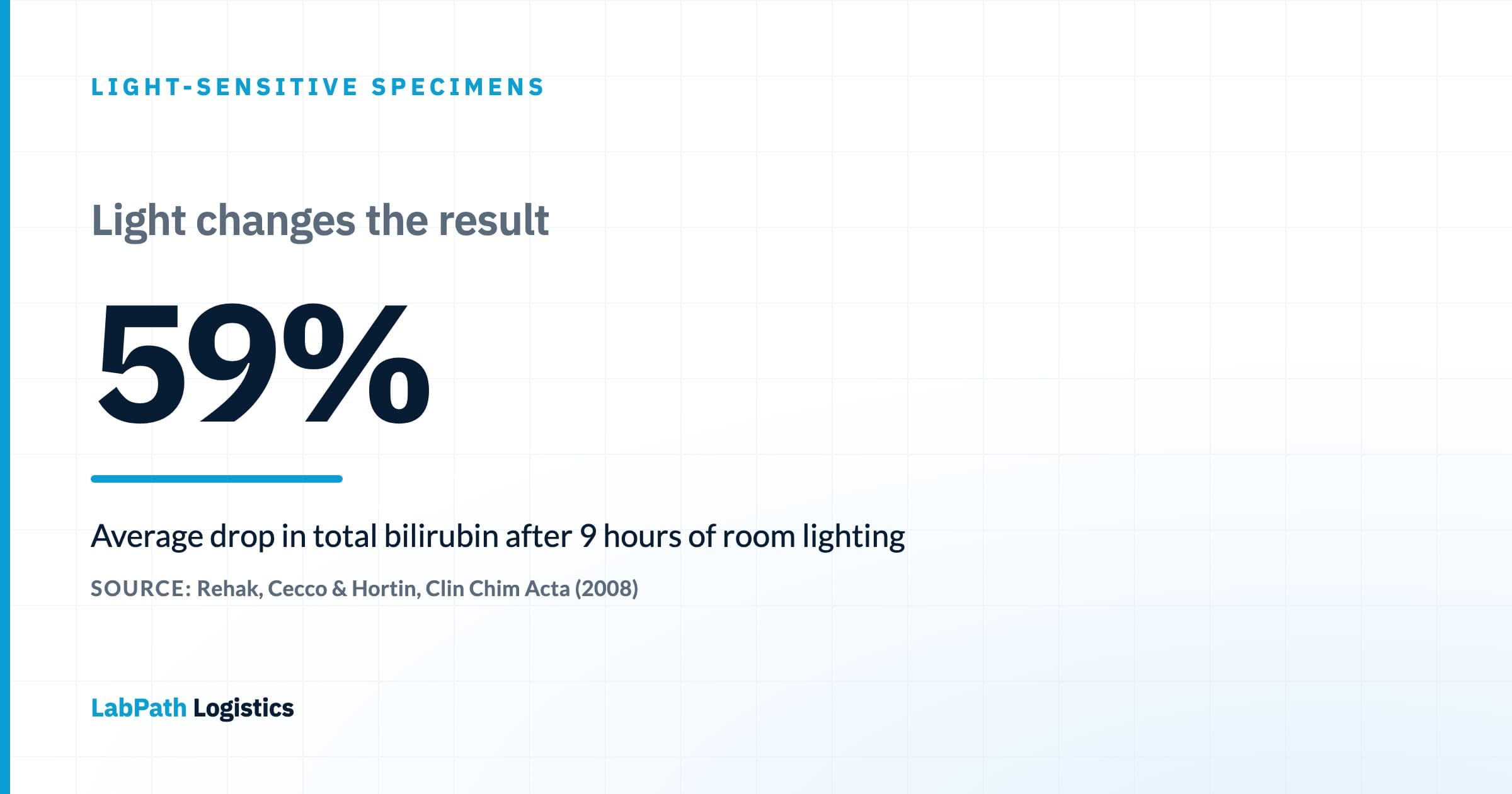
Bilirubin is the standard example. A study by Rehak, Cecco, and Hortin in Clinica Chimica Acta exposed serum specimens to normal laboratory fluorescent lighting and measured the decline. Total bilirubin in normal specimens fell by an average of 59% over nine hours, and the authors concluded that exposure to normal laboratory lighting should be limited to less than two hours to keep bilirubin losses under 10%.
59%
Average decline in total bilirubin after 9 hours of fluorescent room lighting in normobilirubinemic serum (Rehak, Cecco & Hortin, Clinica Chimica Acta)
That study used ordinary indoor lighting, not a Houston parking lot in August. The point for logistics teams is that the exposure does not need to be dramatic. Hours on a lit bench, in a clear bag, or in a cab with the sun on the cooler are enough to matter.
Which Tests Usually Need Light Protection
- Bilirubin, including neonatal samples, which many labs collect in amber containers or ask to be wrapped in foil.
- Vitamin B12 and folate, where ARUP Laboratories instructs that the specimen be protected from light during collection, storage, and shipment.
- Urine and plasma porphyrins and porphobilinogen, which reference labs commonly request in amber or light-protected containers.
- Certain vitamins and drug levels, depending on the assay.
Do not build this list from memory. Requirements vary by lab and by assay, so the reference lab's test directory is the authority. Flag every light-sensitive test in your ordering system so it triggers the right packaging at the point of collection.
Light Protection Is Not Temperature Control
The most common mistake is treating an amber tube as if it solved the whole problem. ARUP's directory for vitamin B12 and folate, for example, asks for light protection and frozen transport. A protected but warm specimen is still a compromised specimen. Pair each light requirement with the temperature requirement in the same directory entry, then match the courier order to both. Our guide to specimen transport temperature covers how the ranges differ, and our post on frozen specimen transport with dry ice covers the frozen leg.
Amber alone is not enough
An amber tube filters light, but a clear outer bag on a sunlit seat still exposes it, and a foil wrap that slips off in a bin defeats the purpose. Use light protection at the tube level and an opaque outer container for the ride.
Where the Courier Leg Exposes the Specimen
- The tube waits on a nurse's station or outbound counter under bright lighting until the scheduled pickup.
- The specimen travels in a clear bag or an open tray instead of an opaque, closed cooler.
- The cooler sits on a passenger seat or dashboard in direct sun between stops.
- The foil wrap or amber sleeve is removed at a hand-off to check the label.
- The receiving dock leaves the box on a counter before it reaches the bench.
Houston adds a compounding factor: heat and glare arrive together. A cooler in a parked vehicle is exposed to both, which is why light and temperature should be managed as one packaging decision. Our post on Houston heat and specimen integrity covers the vehicle side.
A Houston Scenario: The Outreach Draw and the Send-Out
Picture a pediatric clinic in Sugar Land that draws a bilirubin sample in the afternoon and sends it to a reference lab near the Texas Medical Center. The tube is wrapped in foil, but it sits in a clear pouch on the front counter until the 4:00 p.m. pickup, then rides in a bag on the passenger seat. By the time it reaches the bench, the specimen has had hours of light. The lab may reject it or, worse, report a value that reads lower than the patient's true level.
The fix is a process, not a faster van. The tube goes straight from collection into an amber sleeve and an opaque, closed bag. The clinic books the pickup in advance and tells the courier the order is light-sensitive. The driver keeps the container closed and out of direct sun, and hands it to the lab dock without unwrapping it. Our send-out testing logistics guide covers the wider workflow.
A Clinic Process for Light-Sensitive Orders
- Flag light-sensitive tests in the ordering system using your reference lab's directory.
- Collect into an amber tube where offered, or wrap in foil immediately after collection.
- Place the tube in an opaque, closed transport bag or cooler, not a clear pouch.
- Record the collection time and any temperature requirement on the requisition.
- Pre-book the pickup and state "light-sensitive" on the order.
- Ask the driver to keep the container closed and out of direct sun until delivery.
- Track rejections tied to light exposure and review them monthly with your lab.
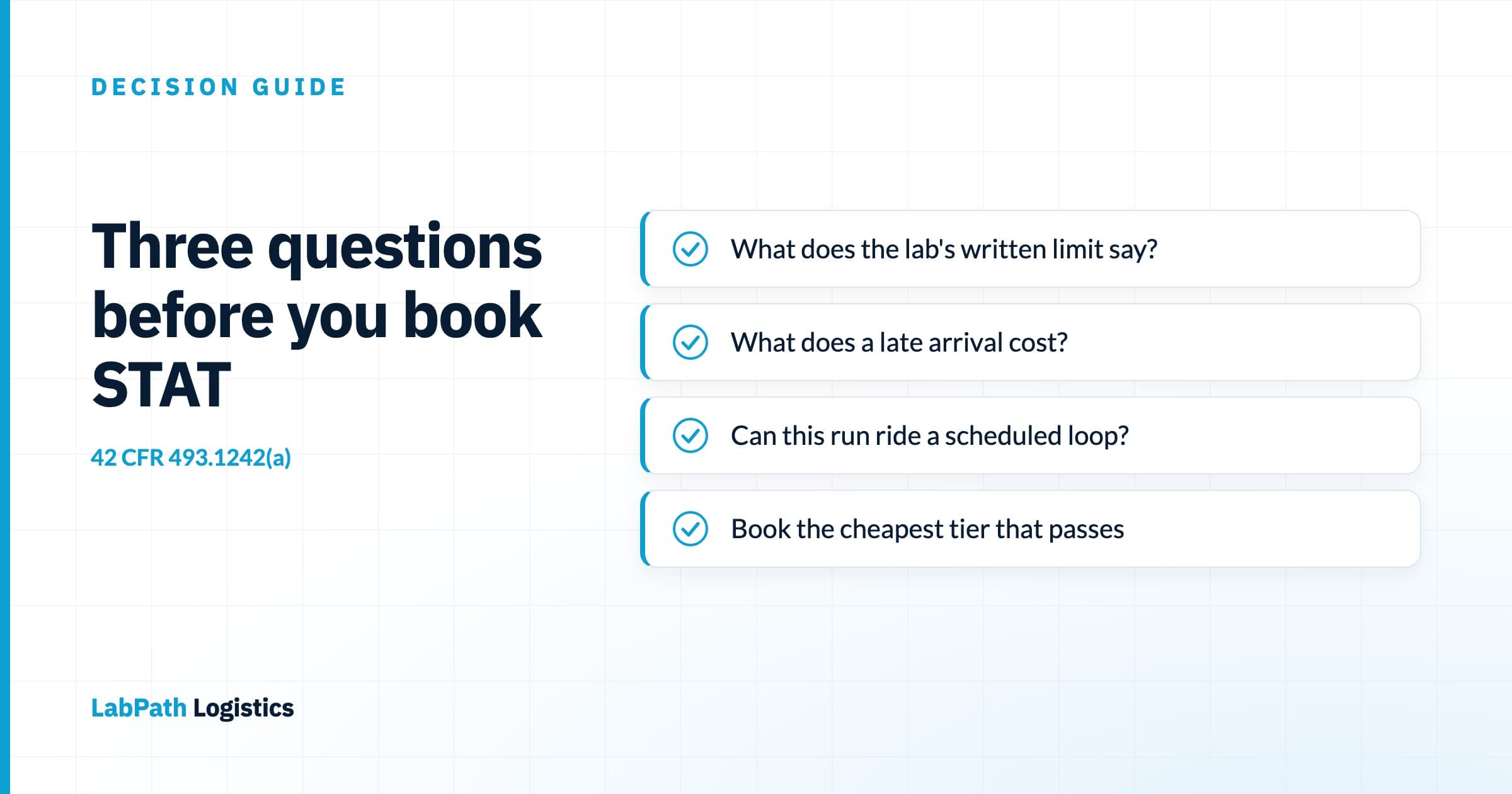
Under CLIA, 42 CFR 493.1242 requires laboratories to maintain written policies for specimen handling and transportation conditions. Your lab's policy is the standard your courier process has to meet. Our overview of specimen rejection causes shows how to turn rejections into a feedback loop.
Frequently Asked Questions
Which lab specimens need to be protected from light?
Common examples include bilirubin, vitamin B12 and folate, and urine porphyrins, but the list depends on the lab and the assay. Check the reference lab's test directory for each order. ARUP, for instance, instructs that vitamin B12 and folate specimens be protected from light during collection, storage, and shipment.
How does light affect a bilirubin specimen?
Light lowers the measured value. In a Clinica Chimica Acta study, total bilirubin in normal serum specimens fell by an average of 59% after nine hours of fluorescent room lighting, and the authors advised limiting exposure to normal lab lighting to under two hours.
Is an amber tube enough for transport?
Not always. An amber tube helps at the tube level, but the specimen should also travel in a closed, opaque container and stay out of direct sun. Many light-sensitive tests also have a temperature requirement, such as frozen transport, which amber packaging does not provide.
Can I wrap a tube in foil instead of using an amber tube?
Many labs accept foil wrapping when an amber container is not available, but acceptance varies. Confirm the option in the reference lab's test directory, and make sure the wrap stays on through the whole hand-off chain.