Hemolyzed Samples in Houston: The Draw or the Drive?
October 22, 2026 · By LabPath Logistics Editorial Team, Medical Logistics Desk
Quick Answer
Most hemolyzed samples are caused at collection, by difficult draws, IV-catheter draws, or rough handling. Transport adds risk when unspun tubes ride against ice packs, bake in a vehicle, wait hours before centrifugation, or get shaken. If rejections cluster by collector, fix the draw. If they cluster by route, day, or season, fix the courier lane.
In Houston, the cold that falsely raises a potassium result is rarely the weather. Far more often it is the inside of a courier cooler. When a clinic's hemolyzed samples and unexplained high-potassium redraws climb, the reflex is to retrain the phlebotomists. Sometimes that is right. Sometimes the tubes left the draw room intact and broke, or leaked, somewhere between the lockbox and the lab bench, and a training session fixes nothing.
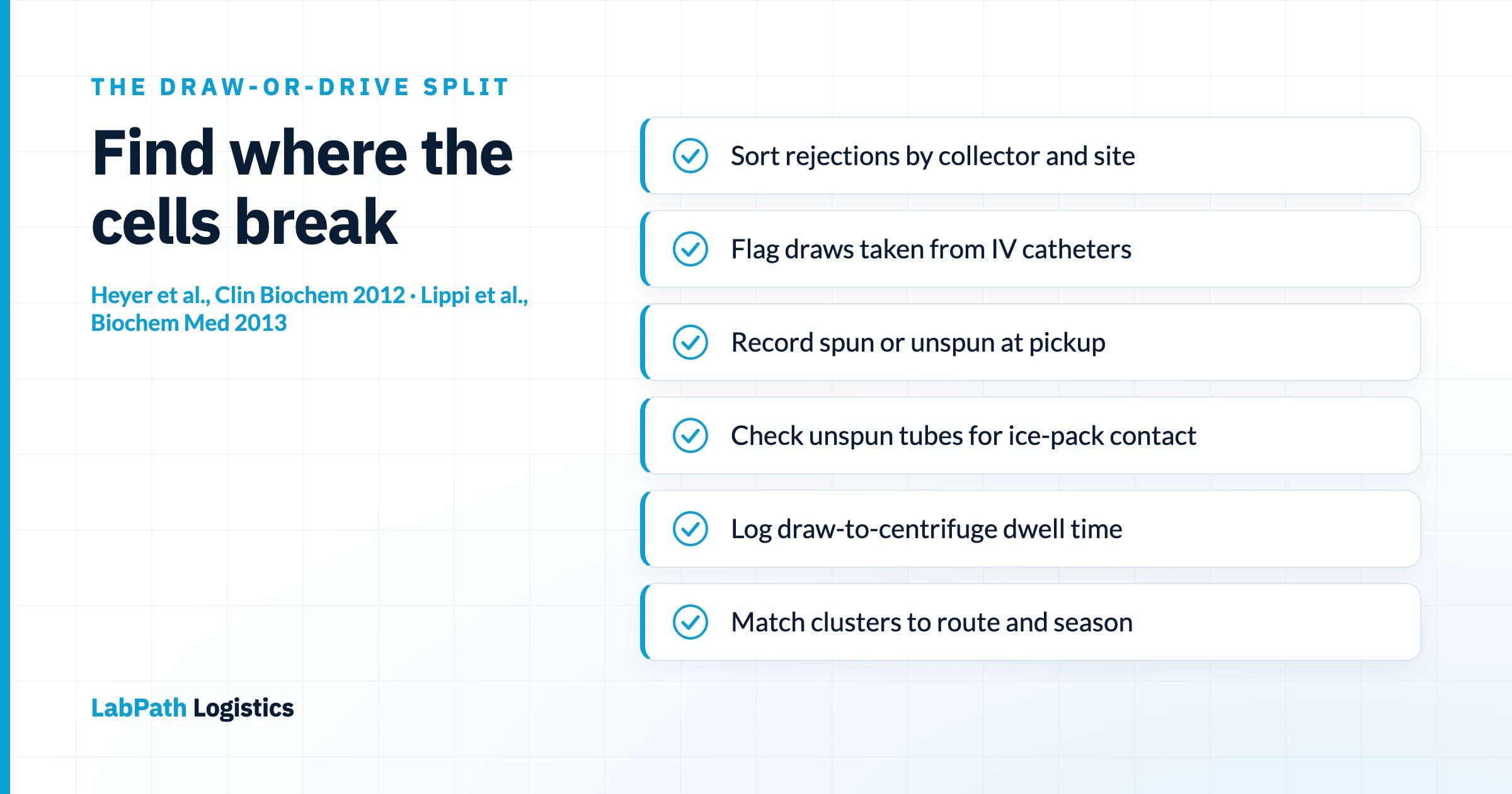
This guide gives you a six-line method, the Draw-or-Drive Split, for working out which side of the handoff your hemolysis problem lives on before you spend money on either side. It is written for clinic managers, outreach lab supervisors, and practice administrators who own the redraw cost but not the whole specimen journey.
How Common Are Hemolyzed Samples?
40% to 70%
of all unsuitable specimens identified by laboratories are hemolyzed, per the CDC-funded Laboratory Medicine Best Practices review (Heyer et al., Clinical Biochemistry, 2012)
Hemolysis is the single largest reason a blood specimen gets rejected or flagged. The Laboratory Medicine Best Practices systematic review led by Heyer and colleagues notes that the American Society for Clinical Pathology set a benchmark of 2% or lower for hemolysis rates, and that many emergency departments run far above it, with studies reporting rates from 6.8% to 19.8% and two above 30%. A meta-analysis by Lippi, Cervellin, and Mattiuzzi in Biochemia Medica put spurious hemolysis at roughly 3% of all serum and plasma samples sent to central laboratories, and 8% to 12% in emergency departments.
Each hemolyzed tube is a redraw, a callback, a delayed result, and often a patient who has already gone home. Our earlier guide to specimen rejection and the courier's role covers the full list of rejection reasons. This post goes deep on the biggest one.
What Causes Hemolysis at the Draw?
Most hemolysis starts at collection. The Heyer review rated the evidence as high strength that drawing by straight-needle venipuncture instead of through an IV start reduces hemolysis in emergency departments, and recommended avoiding IV-catheter draws for that reason. The same review, citing Lippi's work, found that lab-side causes such as improper centrifugation, delayed separation, and re-spinning occur at considerably lower rates than collection and transport practices.
- Draws through IV catheters or small-gauge needles, which shear red cells.
- Difficult sticks, prolonged tourniquet time, and probing for a vein.
- Vigorous shaking instead of gentle inversion when mixing additive tubes.
- Forcing blood from a syringe into a vacuum tube under pressure.
These causes share a signature: they follow the collector. If one phlebotomist, one shift, or one draw method accounts for a disproportionate share of rejections, the problem is upstream of any courier.
Can Transport Cause Hemolysis or False Potassium?
Yes, through a few specific mechanisms. Lippi's group lists freezing and physical trauma during transportation among the in vitro causes of hemolysis. An ADLM Scientific Short on pseudohyperkalemia notes that pneumatic tube transport and centrifugal forces are documented contributors, and that lower temperature inhibits the sodium-potassium pumps on red cells, letting potassium leak out.
That last mechanism is the one courier lanes get wrong most often, and it does not need visible hemolysis to do damage. Unspun whole blood held cold can leak potassium from intact cells, so the specimen may look clean and still report a falsely high potassium. A 2022 study in Nephrology Dialysis Transplantation by Lano and colleagues observed a significant rise in potassium in ambulatory samples kept at +4 °C, suggested controlled ambient storage at 18 to 25 °C to reduce the effect, and cited earlier work finding hyperkalemia in 15% of winter ambulatory samples versus 6% in summer.
- Unspun tubes packed in direct contact with ice packs or frozen gel bricks.
- Unspun tubes left in a parked vehicle on a Houston summer afternoon.
- Long dwell between draw and centrifugation because pickup comes once a day.
- Tubes rattling loose in a bag rather than held upright in a padded rack.
Drive-side causes have a different signature: they follow the route, the pickup time, the day of the week, or the season, and they hit every collector at the site roughly equally. Our specimen transport temperature guide and the post on Houston heat and specimen integrity cover the temperature side in more depth.
The Draw-or-Drive Split: Six Lines to Find the Source
You need 30 days of rejection data from your reference or hospital lab and your own collection log. Most labs will send a rejection report on request.
- Sort every hemolysis and high-potassium rejection by draw site and by collector. Compute each collector's rate, not just the count.
- Flag which rejected draws came through an IV catheter or a syringe transfer. If they dominate, stop here: it is a draw problem.
- Record whether each tube was centrifuged and separated before pickup or traveled as unspun whole blood.
- Ask the courier how unspun tubes are packed. Any direct contact with ice packs, or carry in an unconditioned vehicle, is a drive-side risk.
- Log the time from draw to centrifugation, using the draw time and the courier's pickup and lab receipt timestamps.
- Match rejection clusters to pickup route, time of day, day of week, and season. Clusters that follow the route and hit all collectors point to the drive.
The Draw-or-Drive Split: save and send to your lab director
Over 30 days: (1) hemolysis rate per collector and per site; (2) share of rejections from IV-catheter or syringe draws; (3) spun or unspun at pickup; (4) how unspun tubes are packed and cooled; (5) draw-to-centrifuge dwell time; (6) clusters by route, time, day, and season. Clusters by person mean fix the draw. Clusters by route mean fix the lane. A flat, site-wide rate with long dwell times usually means both.
A Houston Scenario: Same Staff, Two Different Rejection Curves
Picture a multi-site primary care group with offices in Sugar Land and the Heights, both sending to the same reference lab. The Sugar Land office's hemolysis rejections cluster on two collectors who handle the hardest sticks, and they look the same in July and January. That is a draw problem, and coaching on straight-needle technique and gentle inversion is the fix.
The Heights office shows something else. Its rejections, mostly flagged high-potassium results, are spread across every collector and climb on the late-afternoon pickup. Its unspun tubes ride the courier's chemistry cooler pressed against frozen gel packs, after sitting in a lockbox since mid-morning. Retraining the phlebotomists would cost a morning and change nothing. Spinning before pickup, moving unspun tubes to an ambient compartment, and adding a midday stop would. The broader trade-offs of one daily sweep versus timed stops apply directly here.
How Do You Fix a Drive-Side Hemolysis Problem?
Write the fixes into the courier's handling instructions rather than relying on habit. Before you change vendors, write them into your current contract and measure for 14 days. Our pilot program framework shows how to run that test without a long commitment.
- Unspun whole blood rides in an ambient, segregated compartment, never against ice packs.
- Refrigerated specimens ride in a separate validated cooler with a barrier between tubes and coolant.
- Tubes travel upright in padded racks, not loose in a bag.
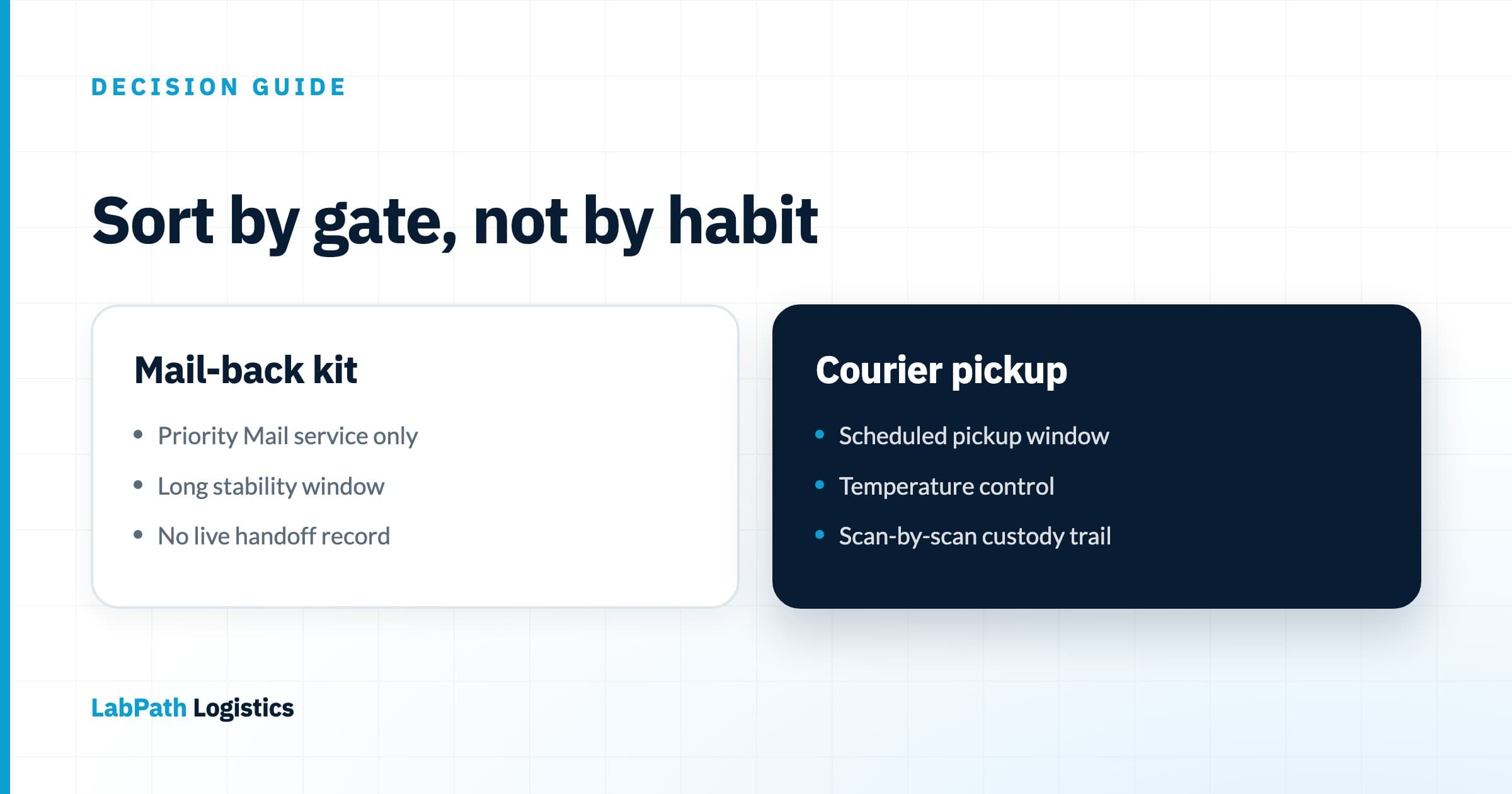
- Pickup times are set so tubes are spun before pickup or reach the lab within its stated stability window.
- Every handoff is timestamped so draw-to-receipt dwell can be computed per specimen.
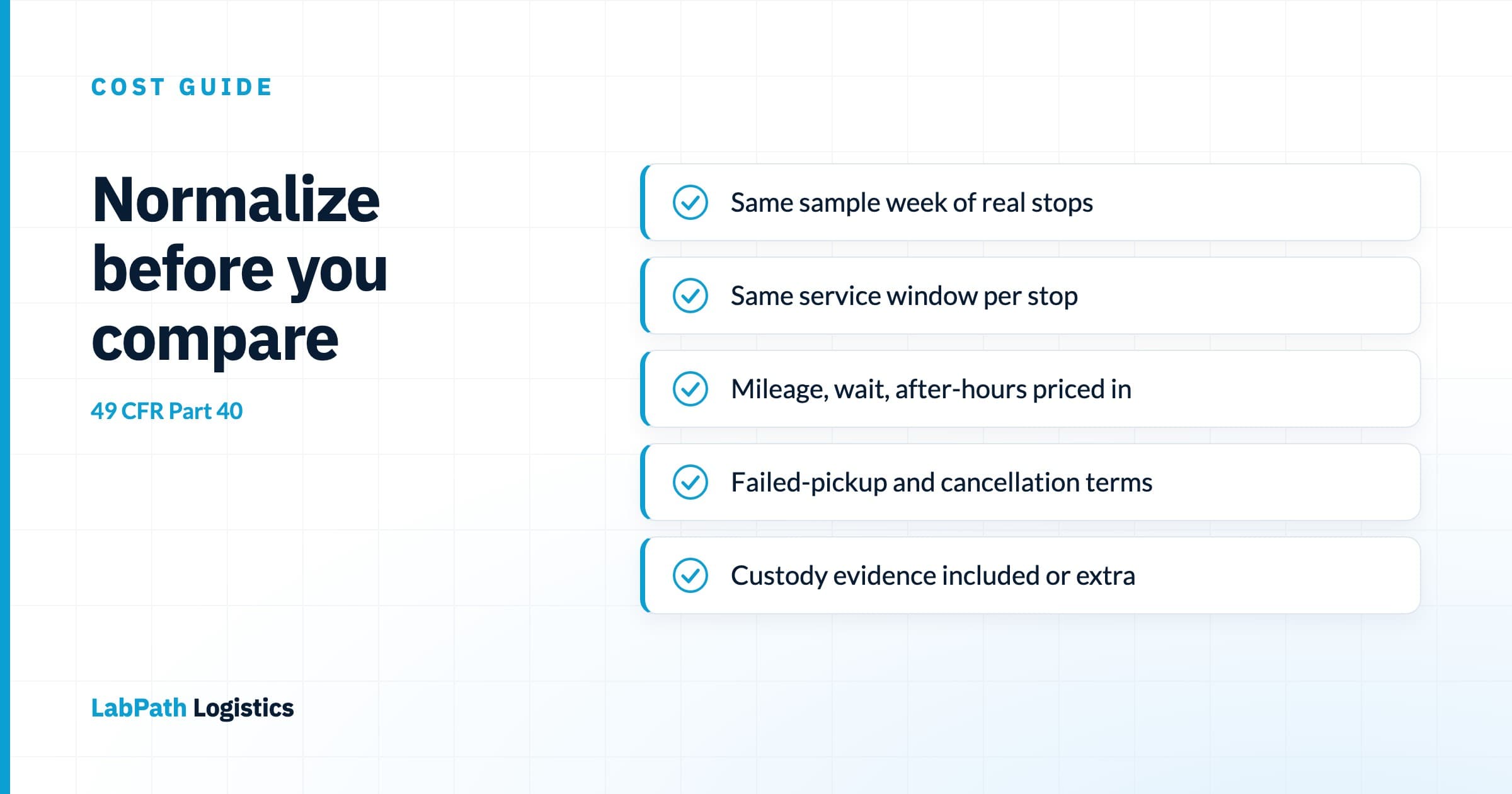
Then price the lane against the redraw cost, not the old invoice. Our nonbinding estimator prices a Houston lane by service level and distance without signup, and the services page explains shared scheduled stops versus dedicated routes so you can match pickup frequency to your dwell-time problem.
LabPath Logistics is in early access for Greater Houston. Our booking-to-receiver-attestation workflow, with package QR scans and append-only custody events that timestamp each handoff, is verified locally; production dispatch, GPS, and temperature telemetry are not live yet. The booking model has no patient fields, by design. The platform preview and privacy engineering notes state exactly what is verified today.
Frequently Asked Questions
What is the most common cause of hemolyzed blood samples?
Most hemolysis is caused at collection: drawing through IV catheters, small needles, difficult or prolonged sticks, forcing blood from a syringe into a tube, and shaking instead of gently inverting. A CDC-funded best-practices review found high-strength evidence that straight-needle venipuncture instead of IV-start draws reduces hemolysis in emergency departments. Transport and processing contribute too, but less often.
Can a courier cause hemolysis or a falsely high potassium?
Yes. Freezing, physical trauma, and pneumatic tube transport are documented causes of in vitro hemolysis. Separately, unspun whole blood held cold, for example against ice packs in a courier cooler, can leak potassium from intact red cells and produce a falsely high potassium without visible hemolysis. Long delays before centrifugation add to both risks.
Should unspun blood tubes be refrigerated during transport?
Generally no, unless the test's own requirements say otherwise. Cold storage of unspun whole blood inhibits the pumps that keep potassium inside red cells, and researchers have recommended controlled ambient storage at 18 to 25 °C for ambulatory samples. Follow your reference lab's specimen requirements for each test, and keep unspun tubes out of direct contact with coolant.
What is an acceptable hemolysis rate?
The American Society for Clinical Pathology set a benchmark of 2% or lower for hemolysis rates. Many emergency departments run well above that, with published rates often between about 7% and 20%. Track the rate per collector and per site, not just the total, so you can see whether the cause follows people or routes.