Category B Specimen Packaging: Houston Lab Guide
July 22, 2026 · By LabPath Logistics Editorial Team, Medical Logistics Desk
Quick Answer
Most routine diagnostic specimens — blood, urine, tissue, and other patient samples moving between Houston clinics, labs, and pharmacies — ship as UN 3373, Biological Substance, Category B. Federal rules in 49 CFR 173.199 require triple packaging: a leakproof primary receptacle, a leakproof secondary packaging with absorbent material between the two, and a rigid outer packaging with at least one side measuring 100 mm or more. The completed package must survive a 1.2-meter (3.9-foot) drop with no leakage, and anything moving by air must also withstand a 95 kPa pressure differential. Category B packaging does not have to be UN-certified the way Category A does, but it must be performance-tested to those thresholds — and the outer box must carry the UN 3373 diamond mark next to the words 'Biological Substance, Category B.'
Nearly every diagnostic specimen a Houston clinic, reference lab, or pharmacy hands to a courier is a regulated dangerous good, and the way it is packaged is set by federal law — not by preference. Get Category B specimen packaging wrong and the consequences range from a leaking sample that ruins a patient's result to a Department of Transportation violation. Get it right and the same tube of blood travels across the Texas Medical Center corridor sealed, contained, and defensible. This guide explains exactly how diagnostic specimens must be packaged as UN 3373, what each layer has to do, and where facilities most often slip.
What 'Category B' Actually Means
Infectious substances are split into two shipping categories, and the difference decides which packaging rulebook applies. Category A covers substances capable of causing permanent disability or life-threatening disease in otherwise healthy people; it ships as UN 2814 or UN 2900 under strict UN-certified packaging. Category B is everything else — the routine patient specimens sent for diagnosis or investigation. Those ship as UN 3373, 'Biological Substance, Category B.'
In practice, the overwhelming majority of what a medical courier moves in Houston is Category B: blood chemistry tubes, urine and stool samples, biopsy and pathology specimens, microbiology swabs, and similar routine diagnostics. Knowing that most of your volume is Category B, not Category A, is what keeps you from either under-packaging a genuine hazard or over-engineering a routine draw.
Category B Does Not Require UN-Certified Packaging
Unlike Category A, Category B packaging under 49 CFR 173.199 does not have to carry a UN specification certification. It does, however, have to be performance-tested — it must demonstrably pass the drop and pressure requirements below. 'Not certified' is not the same as 'anything goes.'
The Triple-Packaging Rule
The core of Category B compliance is triple packaging: three layers, each with a defined job. The federal requirement in 49 CFR 173.199 spells out what each layer must do, and every layer matters — the system only works if all three are correct.
- Primary receptacle. The container that actually holds the specimen — the blood tube, urine cup, or swab vial. It must be leakproof (for liquids) or siftproof (for solids). This is the first line of containment against the sample itself.
- Secondary packaging. A second leakproof or siftproof layer around the primary receptacle. For liquids, absorbent material must sit between the primary and secondary layers — enough to soak up the entire contents of every primary receptacle if one breaks. Multiple primaries must be wrapped or separated so they cannot contact each other.
- Rigid outer packaging. The sturdy box or mailer that faces the outside world. At least one of its surfaces must measure a minimum of 100 mm by 100 mm, so the UN 3373 mark has somewhere to sit legibly.
The reason for three layers is redundancy. If the primary receptacle cracks, the absorbent material captures the spill and the secondary layer contains it; if the secondary layer is compromised, the rigid outer box still keeps the specimen inside the package. No single failure should ever put a specimen — or a driver — at risk.
The Two Tests Your Package Must Pass
Because Category B packaging is performance-based rather than certification-based, the packaging you use has to have demonstrated it can survive two specific stresses. These are not suggestions; they are the thresholds written into the regulation.
1.2 m
Minimum drop height (3.9 feet) the completed package must survive with no leakage from the primary receptacle (49 CFR 173.199)
First, the drop test. The complete, closed package must be able to fall from at least 1.2 meters — roughly the height of a countertop or the floor of a delivery van — and land without any leakage from the primary receptacle, which must stay protected by its absorbent material inside the secondary packaging. A courier who drops a properly packaged Category B specimen should end up with an intact sample, not a biohazard cleanup.
95 kPa
Internal pressure differential (0.95 bar, 14 psi) that air-transported Category B packaging must withstand without leakage (49 CFR 173.199)
Second, the pressure test — which applies when a specimen travels by aircraft. Either the primary receptacle or the secondary packaging must withstand an internal pressure differential of not less than 95 kPa (0.95 bar, or 14 psi) without leaking, because cabin pressure changes at altitude can force a poorly sealed container to weep or burst. Most Houston ground routes stay under the ground rules, but any send-out that connects to a flight has to meet the air standard.
Marking the Outer Box Correctly
A perfectly packaged specimen can still fail an inspection if the box is unmarked. The outer packaging must display the UN 3373 mark — a square-on-point (diamond) shape with each side at least 50 mm long, the line at least 2 mm wide, and the letters and numbers at least 6 mm high. Immediately next to it, in letters at least 6 mm high, the box must read 'Biological Substance, Category B.'
- Use the UN 3373 diamond mark, sides at least 50 mm, on a contrasting background so it is clearly visible.
- Print 'Biological Substance, Category B' adjacent to the mark, letters at least 6 mm high.
- Show the name and address of both shipper and consignee on the outer package.
- Keep the mark on a surface that measures at least 100 mm by 100 mm so it is not cramped or wrapped around a corner.
When Cold Chain and Category B Overlap
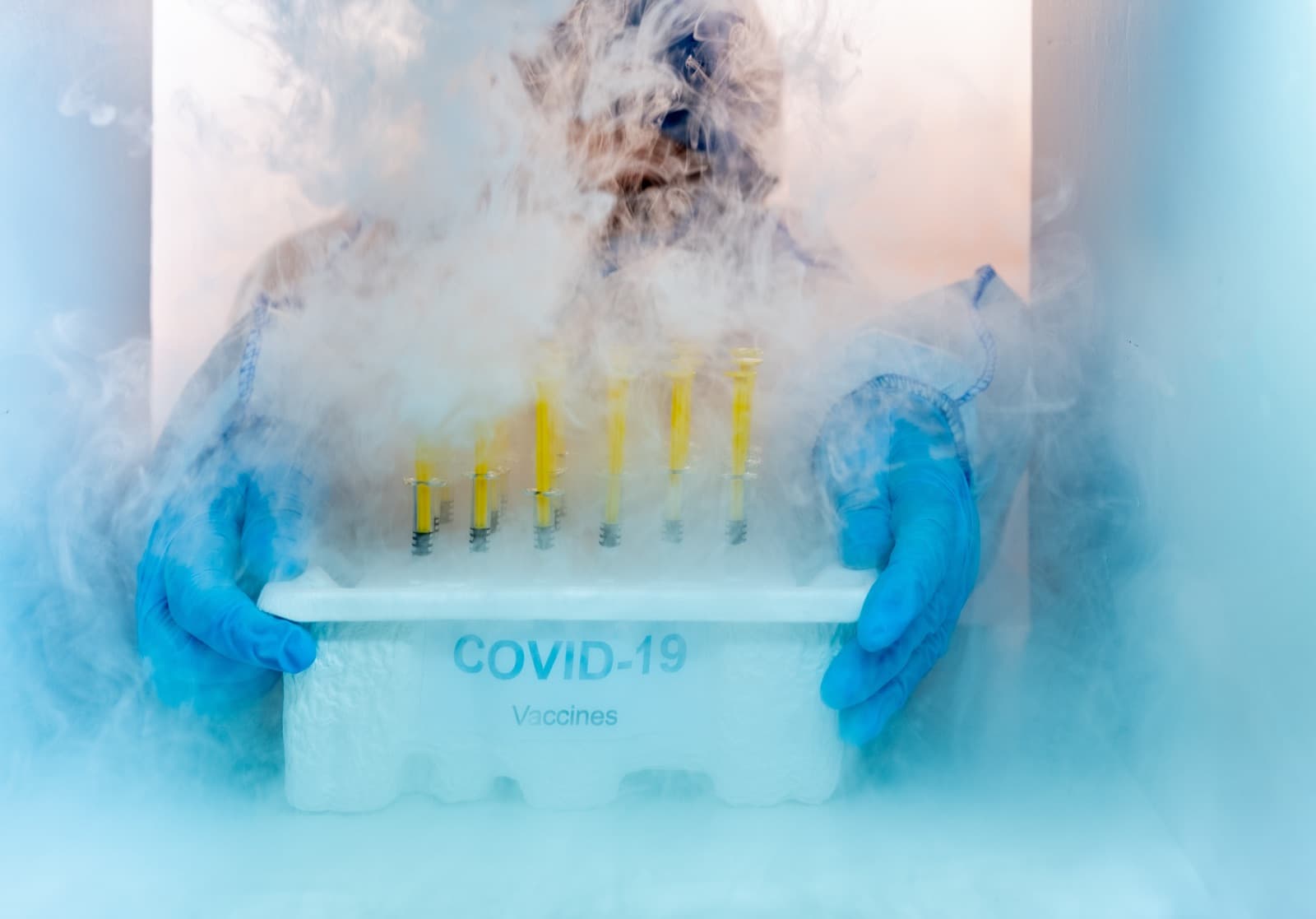
Many Houston specimens need both containment and temperature control, and the two sets of rules stack. When dry ice or a gel coolant is added, it goes outside the secondary packaging, and the package needs interior supports so the secondary packaging stays in position after the refrigerant sublimates. Dry ice is itself a regulated dangerous good (UN 1845) with its own marking and venting requirements, so a frozen Category B shipment carries two obligations at once.
This is where packaging discipline and cold-chain handling at 2–8 °C meet: the triple-packaging system keeps the specimen contained, and the validated cold chain keeps it viable. A courier that treats these as separate checklists — or skips one — leaves a specimen exposed on the axis it neglected.
Why Packaging Discipline Protects the Result
Packaging is not only a safety and legal issue; it is a quality issue. A specimen that leaks, gets crushed, or is exposed in transit becomes a preanalytical failure — an error introduced before testing ever begins — and those errors are expensive to unwind. In a multi-hospital study spanning the U.S., Canada, Germany, and Ireland, each preanalytical error cost a North American hospital an average of about $208 to correct once the redraw, reanalysis, and investigation were counted.
~$208
Average cost to a North American hospital of correcting a single preanalytical (pre-testing) error, including redraw and reanalysis (Green SF, Clinical Biochemistry, 2013)
Correct triple packaging is one of the cheapest ways to keep a specimen out of that failure column. It is closely tied to the broader set of specimen rejection factors a courier can and cannot control: phlebotomy is on the collector, but containment, cushioning, and temperature in transit are squarely on how the sample is packaged and carried. For the driver-hours, hazmat, and documentation rules that surround this, see the DOT and OSHA compliance guide for Houston couriers, and review how LabPath Logistics builds these safeguards into every run on our compliance page.
Key Takeaway
Routine diagnostic specimens ship as UN 3373, Category B, under a triple-packaging rule: a leakproof primary receptacle, an absorbent-lined leakproof secondary layer, and a rigid outer box that survives a 1.2-meter drop, holds 95 kPa under air transport, and carries the UN 3373 diamond mark. The packaging need not be UN-certified, but it must be performance-tested — and every specimen your facility sends is only as protected as its weakest layer.
Frequently Asked Questions
Do routine blood and urine specimens need to be shipped as a dangerous good?
Yes. Most routine patient specimens are classified as UN 3373, Biological Substance, Category B, and must be triple-packaged under 49 CFR 173.199 — a leakproof primary receptacle, a leakproof secondary packaging with absorbent material for liquids, and a rigid outer box marked with the UN 3373 diamond. Only substances capable of causing life-threatening disease in healthy people fall under the stricter Category A rules.
What is the difference between Category A and Category B infectious substances?
Category A substances (UN 2814 or UN 2900) can cause permanent disability or life-threatening disease in otherwise healthy people and require UN-certified packaging. Category B (UN 3373) covers routine diagnostic specimens transported for diagnosis or investigation; its packaging must pass defined performance tests but does not have to be UN-certified.
Does Category B (UN 3373) packaging have to be UN-certified?
No. Unlike Category A, Category B packaging does not require a UN specification certification. It must still be performance-tested — the completed package has to survive a 1.2-meter drop with no leakage, and air shipments must withstand a 95 kPa internal pressure differential.
How should dry ice be handled with a Category B specimen?
Dry ice is placed outside the secondary packaging, and the package must include interior supports so the secondary packaging stays in position after the dry ice sublimates. Dry ice is a separate regulated dangerous good (UN 1845) with its own marking and venting requirements, so a frozen Category B shipment must satisfy both sets of rules.